Tips for Making a Home Safe for People with Dementia
A practical room-by-room guide to making a home safer for people with dementia — covering general safety, layout, flooring, lighting, and bathroom design.
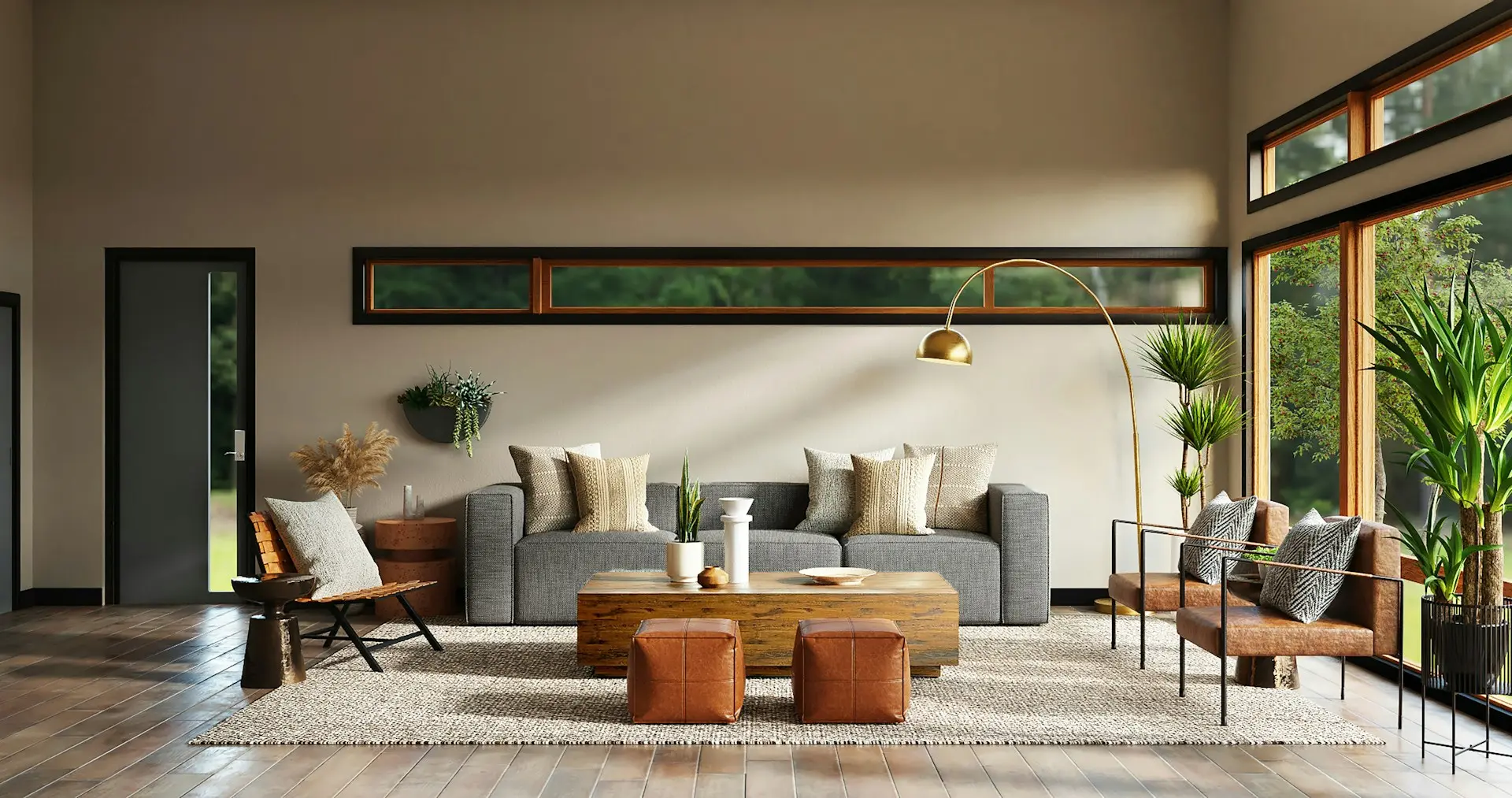
The Villas Type 102 — a dementia-friendly home design
Tips for Making a Home Safe for People with Dementia
Everyone wants to live in a welcoming, comfortable environment that feels safe for daily life. For seniors, there are additional factors that need attention. Even more so when a senior is living with dementia (referred to as a Person with Dementia, or PwD), as several things become more specific — not only because of the physical limitations that can arise with age, but also because dementia brings a gradual decline in thinking and memory.
Read Also: Age-Friendly Homes for the Established Years
Here are some guiding tips for making a home more dementia-friendly for a Person with Dementia (PwD).
General Household Safety
- Avoid clutter and scattered items. In general, a PwD is helped by a tidy, organized space.
- Remove or secure food that is unsafe or no longer fit to eat.
- Secure items that could be mistaken for food or drink, including: cleaning fluids, detergents, insect sprays, paint, medications, and similar substances.
- Lock away tools and equipment that can be dangerous if used incorrectly, such as knives, scissors, and household repair tools (screwdrivers, hammers, ladders, etc.), in a locked cabinet or room.
- Limit a PwD's ability to turn on the stove and household electrical appliances that could be hazardous if misused, such as an iron, hair dryer, washing machine, water dispenser, rice cooker, oven, as well as motor vehicles. Even if they currently appear able to operate something safely, dementia is progressive — cognitive ability will continue to decline, meaning there will come a point, impossible to predict in advance, when a PwD may no longer be able to operate these things safely.
- Minimize excessive environmental noise, including: people speaking loudly, a television or radio that's too loud, too many types of sound mixed together at once, and the noise of machinery or vehicles.
- Ensure that large, heavy, tall objects (such as statues, wardrobes, bookshelves) are stably secured and won't easily topple if bumped into or leaned against.
- Keep the phone numbers of the nearest hospital, ambulance service, and/or medical facility readily available for emergencies.
- Place a chair in the bedroom to make it easier to sit when changing clothes or putting on socks and footwear.
Room Layout
- Lock or secure exterior doors, windows, and gate doors so a PwD cannot leave the home unaccompanied.
- Arrange furniture simply and consistently so each piece can be used without needing to be moved out of the way first.
- Use chairs that have armrests, making it easier to sit down and stand up.
- Pay attention to a PwD's cognitive ability in relation to decorative household objects, and secure them if needed. In certain situations, a PwD may confuse decorative flowers or plants with vegetables or fruit to eat. Small objects like beads or marbles can also be mistaken for sweets.
- Provide glass-door storage cabinets with neatly arranged contents so items needed daily can be easily seen and found.
- On shelves and in cabinets, ensure that all commonly needed items are positioned at a reachable height to avoid a PwD trying to climb on a chair or ledge to reach something.
- Avoid using glass or mirrored surfaces on walls and doors. A PwD may have difficulty judging distances or understanding what they see — glass walls or doors pose a collision risk, and mirrors may startle them when they see their own reflection. If needed, use stickers or decorations on glass surfaces and windows to make them more visible.
- If helpful, use different colors to help a PwD distinguish between surfaces — for example, a door from a wall.
- If helpful, use room signage to help a PwD identify rooms, such as "Bedroom" or "Bathroom."
- Ensure a way exists (a spare key or tool) to open a bedroom door from the outside, in case a PwD locks themselves in and needs help.
- Ensure every staircase (more than 3 steps) has a handrail.
- Ensure every raised terrace (such as a balcony) has a railing to prevent falls.
Flooring
- Use flooring with a simple pattern (not too many designs or color variations).
- Check floor conditions and eliminate hazards, including: uneven or stepped surfaces, slippery or wet surfaces, trip hazards, and level differences or steps that are the same color as the surrounding floor.
- Avoid using door mats, rugs, or other floor coverings that can fold or slide easily, as these are a tripping hazard.
- Keep electrical cords and other extended materials off the floor where they might stretch across a room and be tripped over.
Lighting
- Provide lighting that is bright enough — approximately twice what a typical person's eyes would need.
- Maximize natural sunlight through windows.
- Arrange lighting and room layout so that light is distributed evenly with minimal shadows.
- Provide a small light that stays on at night to illuminate the path from the bed to the toilet.
Bathroom
- Use flooring material that isn't easily slippery, especially when wet or soapy.
- Install an adequate number and positioning of grab bars to allow for safe gripping.
- Ensure the water heater temperature setting is set to a maximum of 49°C (120°F) to prevent accidental scalding.
- Ensure a way exists (a key or tool) to open the bathroom door from the outside, in case a PwD locks themselves in and needs help.
RUKUN Senior Living
Darmawan Park Area
Jl. Babakan Madang No. 99
Sentul Selatan – Bogor 16810
Phone: 021 8795 1525
Facebook: RUKUNSeniorLiving
Instagram: @rukunseniorlivingindonesia
Because dementia brings a decline in thinking and memory in addition to typical physical limitations, requiring additional adjustments such as securing hazardous equipment, minimizing noise, and providing room signage.
Because dementia is progressive and cognitive decline will continue, meaning there will come a point when a PwD can no longer operate appliances safely — even if they currently appear to be managing fine.
A PwD may have difficulty judging distances or understanding what they see, so glass poses a collision risk, and mirrors can startle them when they see their own reflection.
The water heater temperature setting should be at a maximum of 49°C (120°F) to prevent accidental scalding.
Ideal lighting is approximately twice what a typical person's eyes would need, with even distribution and minimal shadows, plus a small night light to illuminate the path from bed to toilet.